Your rooftop panels are quietly losing power right now, and most owners in Lahore don’t notice until the electricity bill starts creeping back up. Learning how to clean solar panels the right way is the difference between a system that pays for itself in a few years and one that limps along at half its potential. This guide walks through the practical method, the local timing that actually matters, and the mistakes that crack glass or void your warranty.
Solar plate cleaning isn’t rocket science, but Lahore makes it specific. Between fine dust, thick winter smog, and the occasional pigeon parking lot, panels here get dirty faster than any sales brochure will admit. The goal isn’t a sparkling photo for Instagram — it’s keeping every cell pulling its weight.
Why do dirty solar panels lose so much power?
Dirty panels lose power because anything blocking sunlight directly cuts the current a cell can produce. A thin, even film of grime can shave 5–15% off output, and stubborn patches like droppings or caked mud can knock individual cells far harder than that.
The villain in Lahore is dust and smog buildup. Particulate from traffic and seasonal crop burning settles on the glass, then the first light drizzle turns it into a sticky paste instead of washing it away. That paste bakes on under the sun and refuses to leave on its own.
There’s a sneakier problem too. When one corner of a panel sits in shade-like grime, it can drag down the whole string it’s wired into, so a small dirty spot punishes clean cells around it. That’s why ignoring buildup quietly erodes your solar panel efficiency long before the damage looks dramatic. Restoring lost energy output is usually the single cheapest performance upgrade you’ll ever do.
How to clean solar panels safely, step by step
The safest way to learn how to clean solar panels is to treat the glass like an expensive camera lens: gentle tools, soft water, no scrubbing pressure. Here’s the routine that works on Lahore rooftops without scratching anything.
- Shut the system down first or clean early so the panels are cool. Cold water on hot glass can crack it.
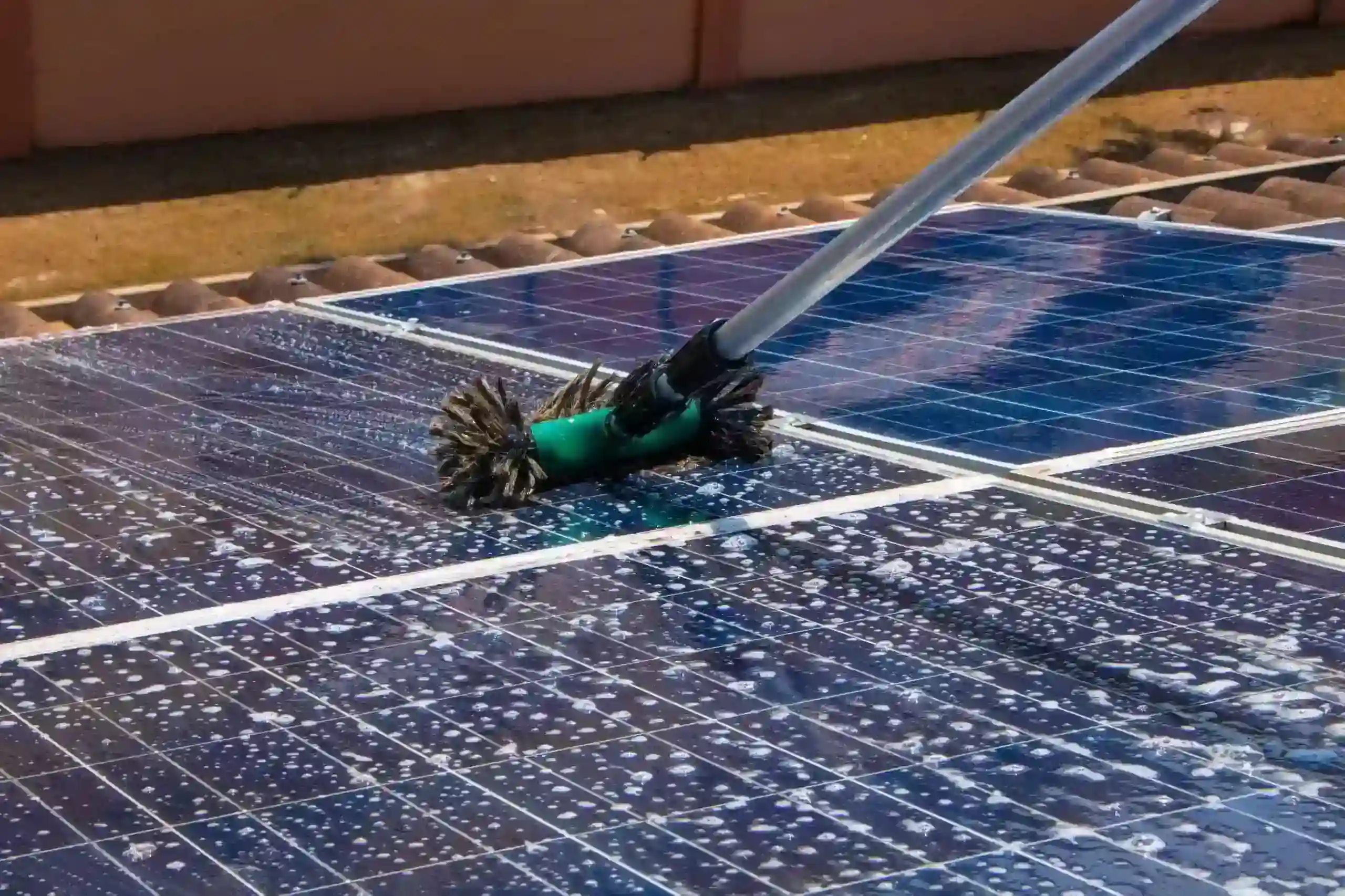
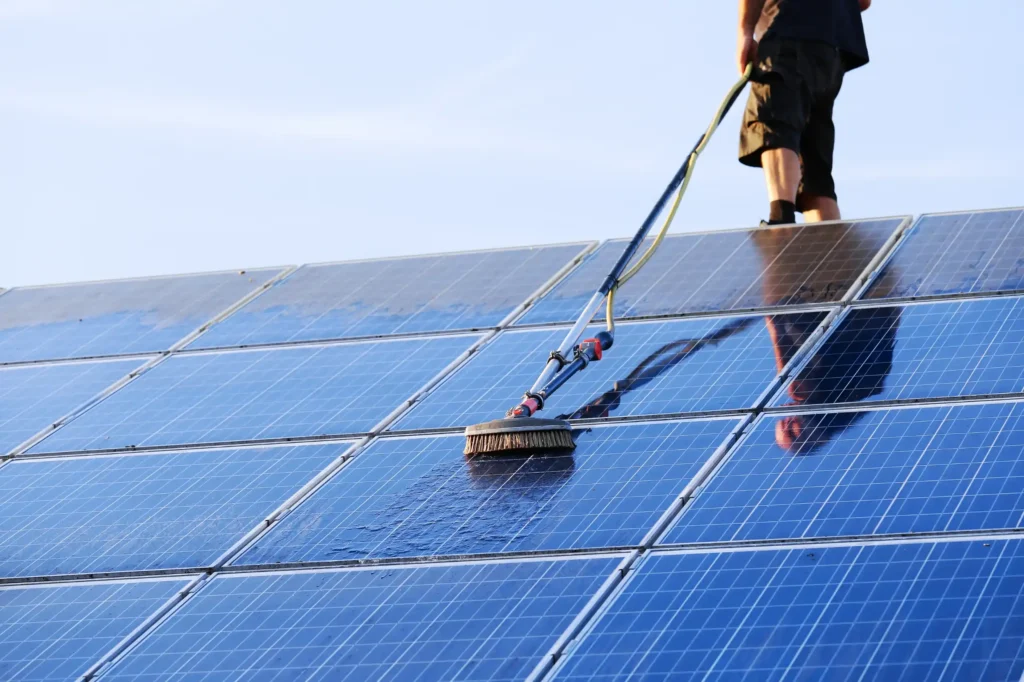
- Rinse loose dust with a low-pressure hose to lift grit before you ever touch the surface.
- Wash with plain water and, where possible, distilled water for the final rinse so hard-water minerals don’t leave a chalky film that blocks light all over again.
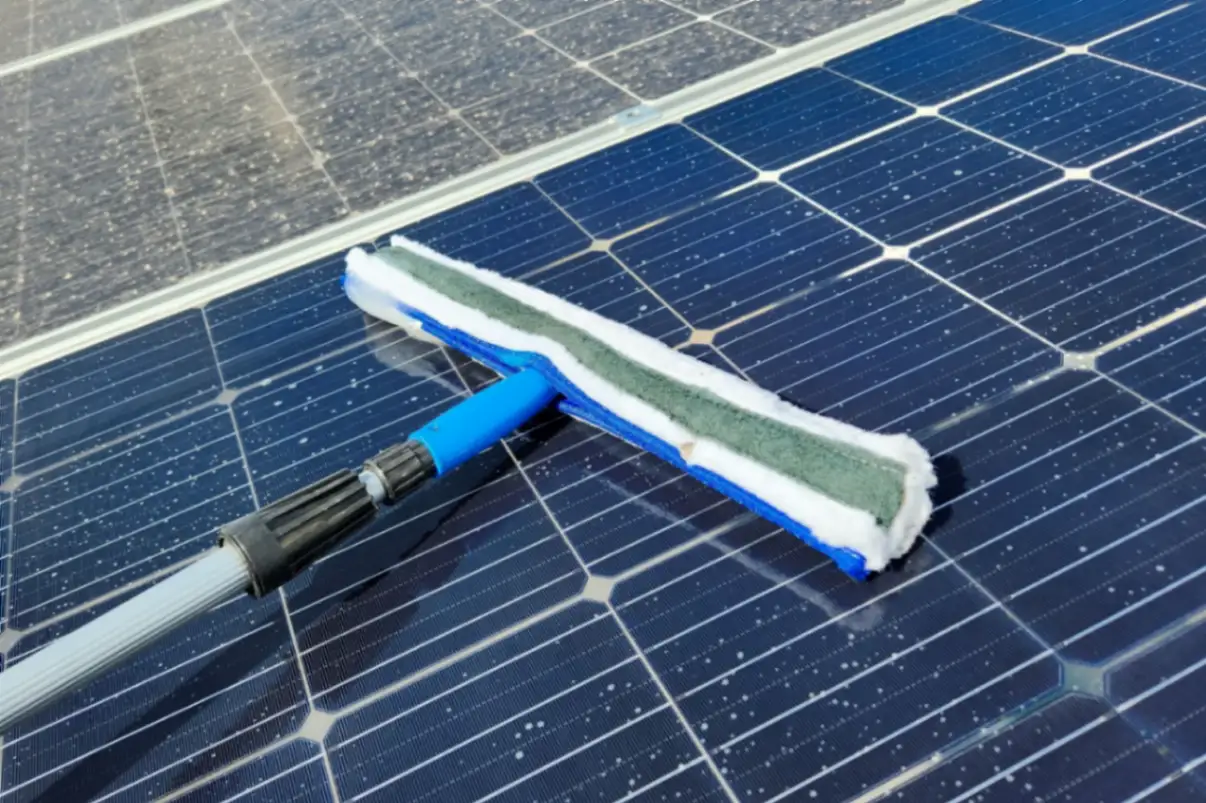
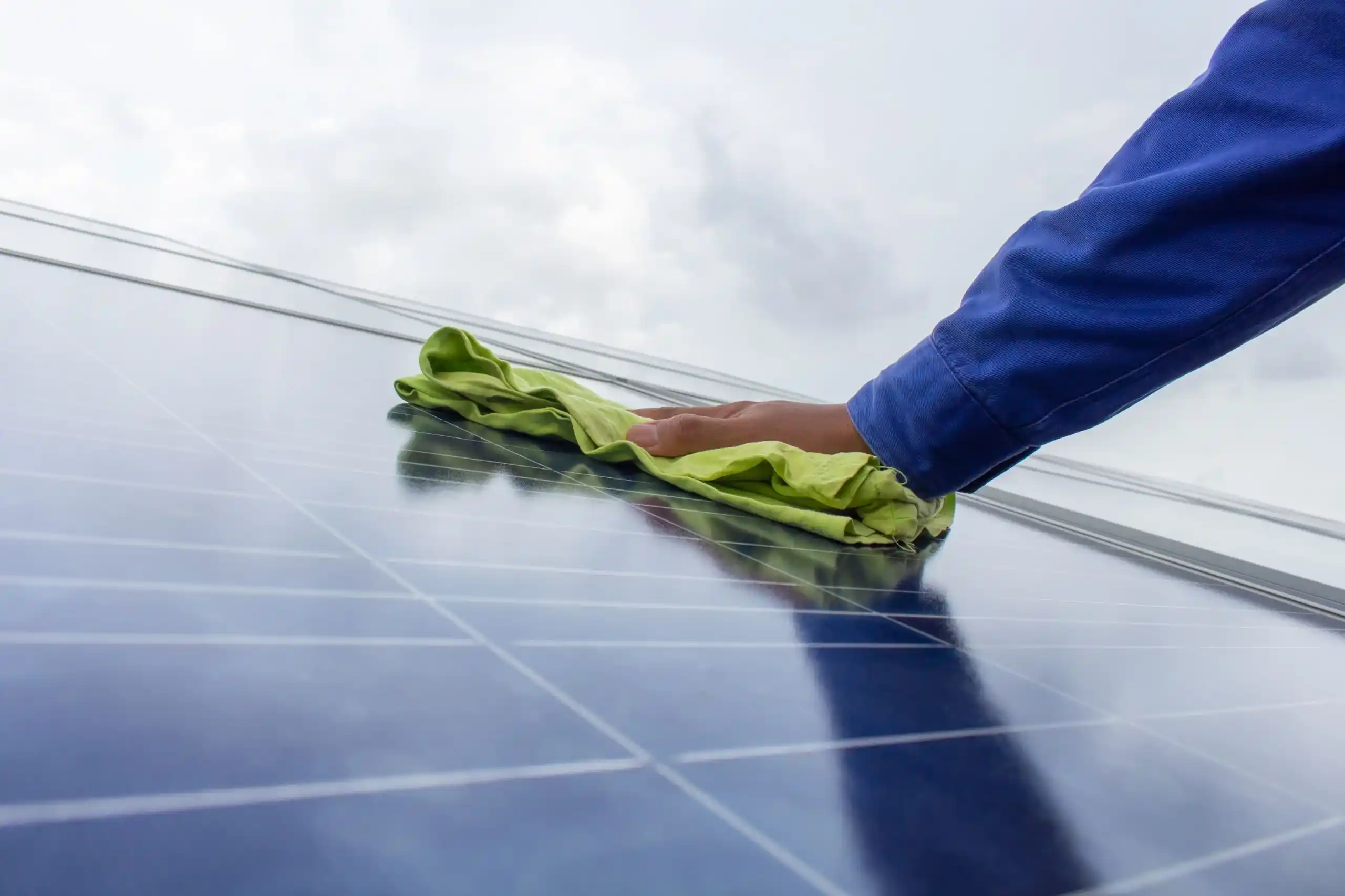
- Use a soft-bristle brush or a microfiber pad on a pole. Never use metal, scouring pads, or anything abrasive.
- For greasy smog residue, a drop of mild dish soap in a bucket is plenty. Skip harsh detergents and solvents entirely.
Work in sections, rinse thoroughly, and let the panels air dry. Tap water in much of the city runs hard, so that final pass with distilled water is what separates a streak-free job from a hazy one.
When is the best time to clean panels in Lahore?
The best time to clean is early morning, before sunrise heat builds and while the air is calmer. Cool glass is safer, water doesn’t evaporate into spots, and you avoid working on a scorching roof in June or July.
Timing also follows the seasons here. After the monsoon season ends, panels are often coated in that rain-and-dust paste, so a late-summer clean restores a noticeable chunk of lost power. The other critical window is smog season — roughly November through January — when air quality tanks and grime settles thick and fast.
One genuinely local habit pays off: a quick rinse the morning after a dust storm. Lahore’s pre-monsoon andhi can drop a visible layer overnight, and clearing it promptly stops it from cementing. Smart solar panel maintenance here is really about reacting to the weather, not following a rigid calendar from somewhere with cleaner air.
What mistakes damage panels and void the warranty?
The fastest way to damage a panel is to attack it with force or the wrong water. Pressure washers are the classic Lahore mistake — that high-pressure jet can force water past the seals, fog the laminate, and instantly void most manufacturer warranties.
Watch out for these specific traps:
- Scraping bird droppings with a blade or stiff edge. Soak them with water first, then lift gently with a soft pad — droppings are acidic and need patience, not aggression.
- Cleaning at midday on hot glass, which risks thermal cracks you won’t see until output drops.
- Walking on the panels for a “better angle.” The cells crack under body weight even when the glass looks fine.
- Using borewell or hard tap water as the final rinse and leaving mineral streaks that block light.
Teams like AfinitySolar see plenty of avoidable damage that traces back to one rushed weekend clean gone wrong. When a roof is steep, high, or wired into a large array, getting a trained crew to handle it once a year is cheaper than replacing a cracked module.
How often should you actually clean your panels?
For most Lahore homes, a thorough clean every 4–6 weeks keeps performance steady, with extra spot-cleans after dust storms or heavy bird activity. Rooftops near busy roads, construction, or trees usually need the shorter end of that range.
Build a simple solar panel maintenance rhythm instead of waiting for a problem. Glance at the panels weekly, do a proper wash monthly, and tighten that schedule during smog season when buildup accelerates. If you track your daily generation, a sudden dip on sunny days is your cue that grime — not the system — is the issue. Consistent care protects both your solar panel efficiency and the long lifespan you paid for.
Final thoughts
Clean panels are the quietest win in any solar setup. You don’t need expensive gadgets — just cool glass, soft tools, the right water, and timing that respects Lahore’s dust and monsoon season. Skip the pressure washer, never scrub hot panels, and treat stubborn bird droppings with soaking rather than force.
Knowing how to clean solar panels properly means your system keeps delivering the energy output it promised on day one. Stay consistent, watch the weather, and let the panels do the work they were installed for.
Frequently Asked Questions
Can I clean my solar panels with normal tap water?
You can rinse with tap water, but Lahore’s hard water often leaves mineral streaks that block light. For the final pass, distilled water gives a streak-free finish and protects your solar panel efficiency.
How do I remove bird droppings without scratching the glass?
Soak the bird droppings with water first to soften them, then lift gently with a soft-bristle brush or microfiber pad. Never scrape with a blade or stiff edge, since droppings are acidic and the dried crust can scratch the surface.
Is it safe to clean solar panels in the afternoon?
No, cleaning hot panels in the afternoon risks thermal cracks when cool water hits heated glass. The best time is early morning, when the panels are cool and water dries without leaving spots.
How often should I clean panels during smog season?
During smog season, aim for cleaning every 2–4 weeks because dust and smog buildup settles much faster. Tightening your solar panel maintenance schedule in those months prevents a steady drop in power.
Will dirty panels really lower my electricity savings?
Yes, even a thin film of grime can cut energy output by 5–15%, and stubborn patches do more damage. Regular cleaning is one of the cheapest ways to protect your savings and learning how to clean solar panels correctly keeps that loss to a minimum.