
Dust is relentless in Lahore. Between canal-side humidity, October smog, and the dry summer winds that sweep the Punjab plains, solar panels here face conditions that few other cities can match. Professional solar panel cleaning services exist precisely because this environment turns a productive solar setup into an underperforming one — fast. Understanding how cleaning works, what methods apply, and how often your system needs attention can save you serious money on lost generation.
Solar panels operate on a simple principle: sunlight hits photovoltaic cells and produces electricity. Anything blocking that sunlight reduces output. In Lahore, that “anything” accumulates aggressively — fine clay dust, bird droppings near Gulshan-e-Ravi and Model Town trees, smog residue from the industrial belt, and construction particulate from ongoing development across DHA and Bahria Town. Ignoring the buildup isn’t neutral. Studies on South Asian installations consistently show 20 to 35 percent generation loss from soiled panels.
Why Lahore’s Climate Makes Cleaning Non-Negotiable
Lahore sits in one of Pakistan’s most agriculturally active plains. Seasonal changes bring specific soiling patterns that compound over time.
Pre-monsoon months — April through June — bring intense heat and dry winds. Fine dust settles in a film across panel glass. This film alone can cut efficiency by 15 percent within weeks. After monsoon rains clear the dust, wet mud residue and algae spores take hold instead. Winter smog from November onward deposits a sticky aerosol layer that standard rainfall cannot remove on its own.
Each season creates a different problem. That means a single annual clean is rarely enough for Lahore installations. Most rooftop systems here benefit from cleaning every two to three months, depending on their location and surrounding vegetation.
What a Professional Cleaning Service Actually Does
A trained solar panel cleaning service does more than wipe surfaces with water. The process is systematic and equipment-specific.
Technicians begin with a visual inspection of the panel array. They check for cracks, delamination, hot spots, and faulty mounting brackets — problems that become visible only when someone is standing close to the panels. Cleaning without inspection misses structural issues that cleaning itself can worsen.
Water quality matters significantly during the wash. Hard water — common in many parts of Lahore — leaves mineral deposits on glass after it evaporates. Professional services use deionised or softened water to prevent this. Tap water cleaning, by contrast, can leave a residue that accelerates future soiling and eventually etches the glass coating.
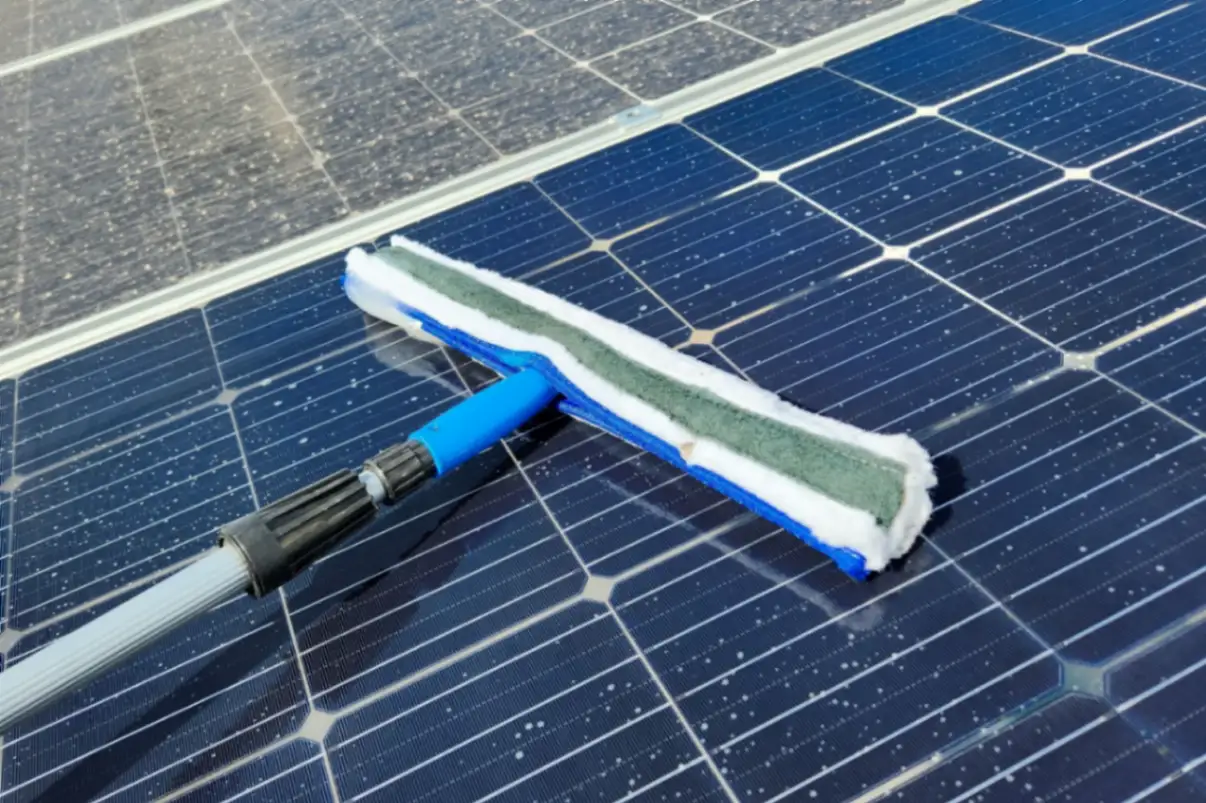
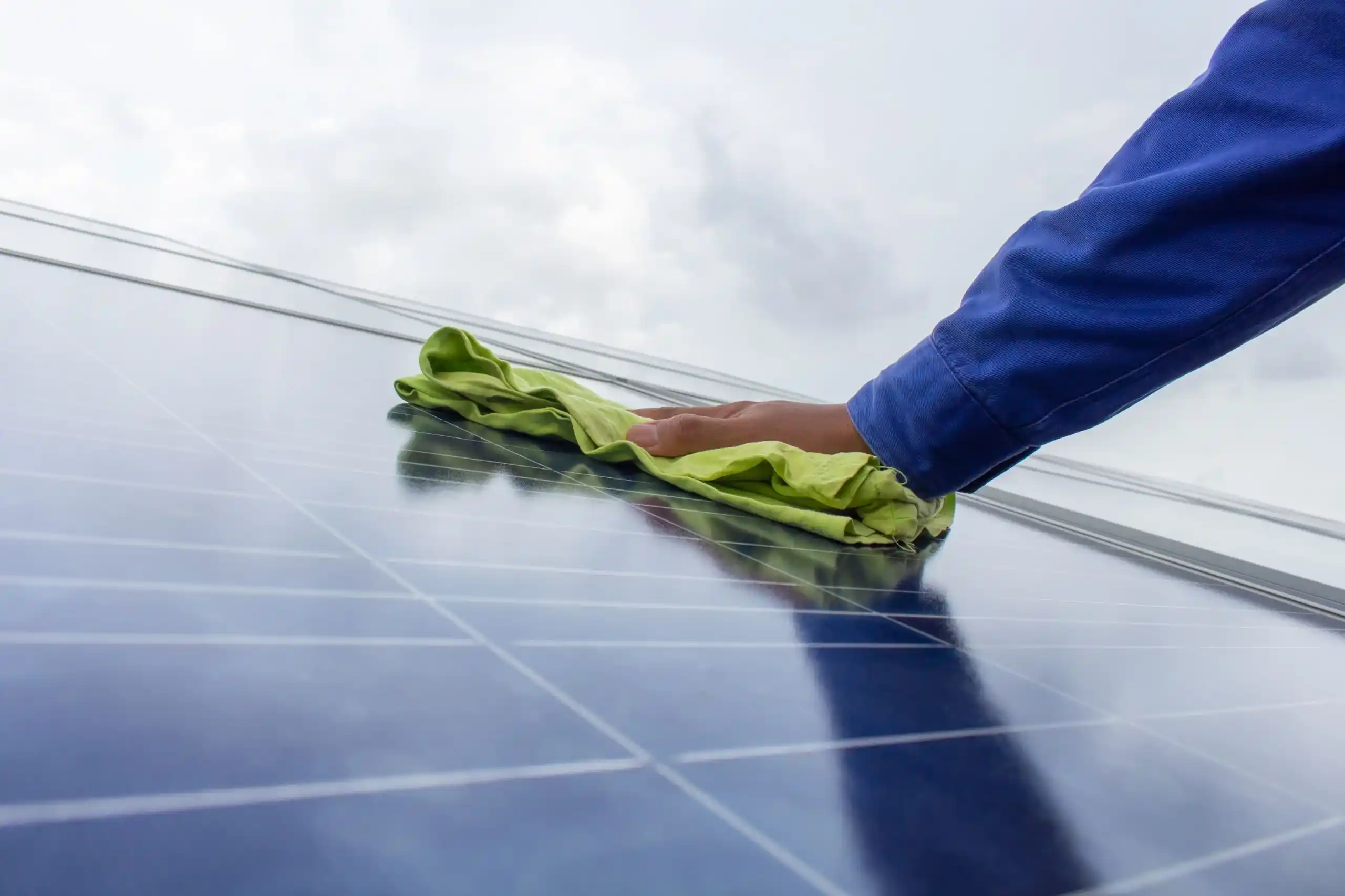
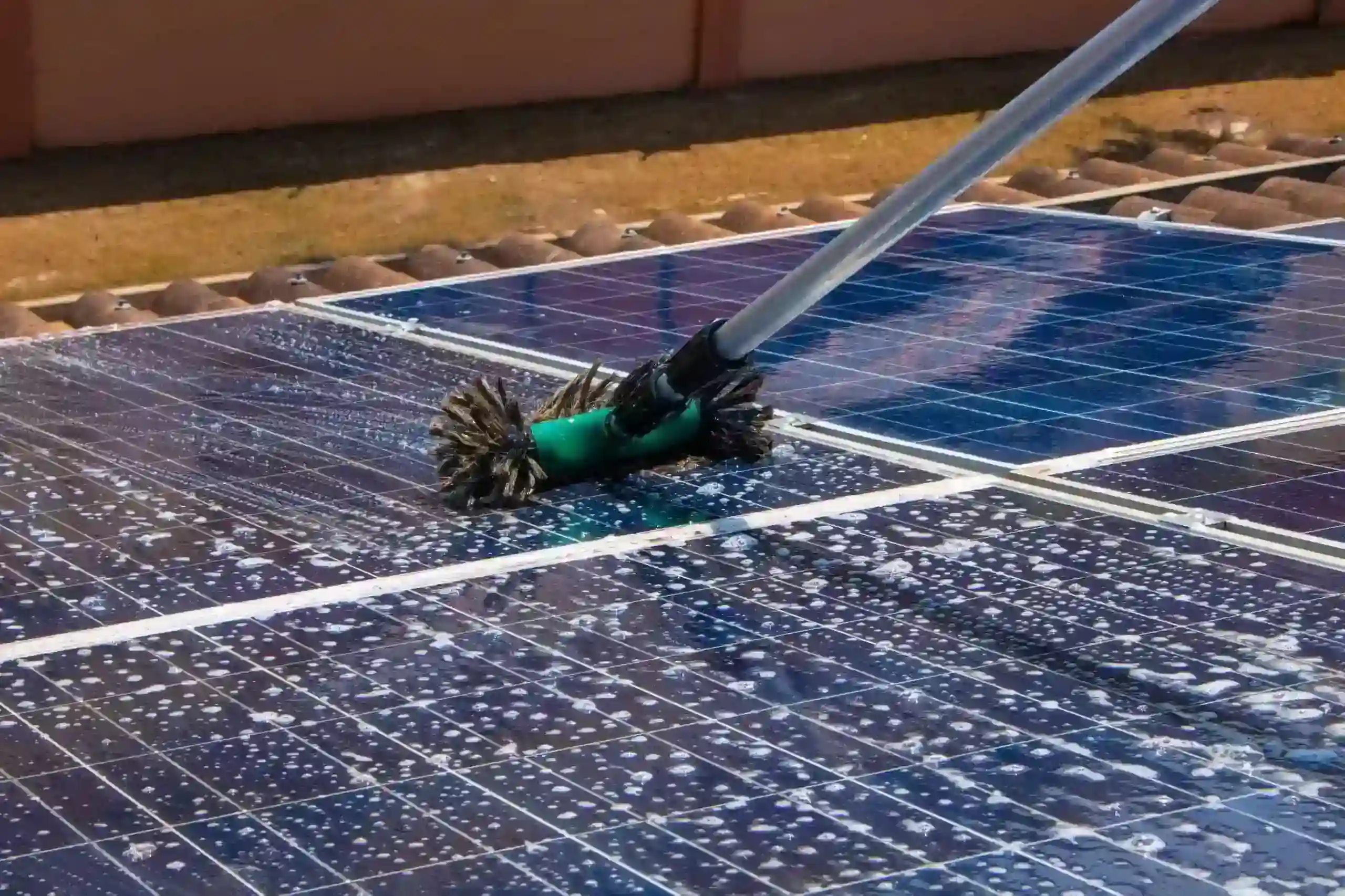
Technicians then use soft-bristle brushes or microfibre pads with extending poles. High-pressure jets are avoided on quality systems because they can drive water into junction boxes and damage EVA encapsulant layers over time. The wash ends with a squeegee pass and a dry wipe to prevent streaking.
Solar Panel Cleaning Kit: When DIY Makes Sense
Not every system needs a technician every time. For smaller residential setups on accessible flat rooftops — common in Johar Town and Gulberg — a solar panel cleaning kit is a practical option for routine maintenance between professional visits.
A basic kit typically includes an extendable brush, a hose attachment with flow control, and a squeegee head. Higher-spec kits add water filtration to reduce mineral deposit issues. Using one correctly requires working in early morning or late evening. Cleaning midday on hot glass causes water to evaporate too quickly and leaves behind residue. It also creates thermal shock risk on older panels.
That said, DIY cleaning has real limits. Anyone working on a roof faces safety risks without proper harness and anchor points. Panels mounted at steep angles or on multi-story buildings should only be handled by professionals with the right equipment. Additionally, a homeowner with a kit cannot perform the inspection a technician would carry out — meaning early-stage faults go undetected.
Auto Solar Panel Cleaning System: Is It Worth Considering?
An automatic solar panel cleaning system uses motorised brush mechanisms or robotic units to clean panels on a timed schedule without manual involvement. These systems are already common in commercial solar farms in Sindh and Punjab’s agricultural sector, where panel arrays span thousands of square metres.
For large rooftop installations in Lahore — typically above 20 kilowatts — automation makes economic sense. Labour cost for frequent manual cleaning across a large array adds up quickly. An automated system, once installed, operates at a fraction of that ongoing cost. Some systems use dry brushes that clean without water, which matters in areas where water supply is inconsistent.
For standard residential systems of 5 to 10 kilowatts, the upfront cost of automation rarely pays back quickly enough. Manual professional cleaning, scheduled quarterly, remains the more cost-effective approach for most Lahore homeowners.
How to Evaluate a Cleaning Service Provider
Choosing a reliable provider for Solar plate Cleaning Services in Lahore takes more than a Google search and a phone call. Several practical checks separate competent operators from those who will damage your system or deliver surface-level results.
Ask about water source and treatment. Any credible provider should be using filtered or deionised water, not a basic hose connection. Ask whether technicians are trained specifically on photovoltaic systems — roofing companies that have expanded into solar cleaning don’t always understand panel-specific risks. Confirm that the team carries insurance, since any damage caused during cleaning should be the service provider’s liability, not yours.
Request a pre-clean and post-clean generation comparison if the provider can offer it. Some services, including those offered by AfinitySolar, document panel output before and after cleaning so that customers can see the performance difference directly. That kind of transparency is a strong indicator of a professional operation.
Pricing should reflect panel count, roof accessibility, and water treatment method — not just a flat rate applied to every job equally. A quote that does not account for these variables usually signals a provider cutting corners somewhere in the process.
How Often Should Lahore Systems Be Cleaned
Frequency depends on location within the city and the system’s immediate environment. Rooftops near main roads — Ferozepur Road, GT Road, Canal Bank — accumulate dust faster than properties set back in residential blocks. Systems near trees face persistent bird dropping problems that require more frequent attention.
A practical baseline for most Lahore installations is four cleanings per year — once before summer, once after the monsoon, once entering winter smog season, and once in late winter before the agricultural burning cycle peaks. Systems within 200 metres of a major construction site may need monthly checks during the building phase.
Monitoring your inverter’s daily generation data is the most reliable signal. A consistent drop in output that coincides with dry, dusty periods almost always points to soiling as the cause. Catching it early and scheduling a clean promptly brings generation back without the long-term efficiency degradation that extended soiling can cause.