Most residents in Paragon City discover their solar setup is underperforming only after the electricity bill arrives higher than expected. Solar panel cleaning services tackle the root cause of that lost generation — fine residue sitting across the glass that quietly shaves off output day after day. Reading through the full picture of how this work gets done will save you guesswork when scheduling your next maintenance round.
Living near the Raiwind Road belt comes with environmental realities that affect rooftop arrays daily. Wheat threshing in nearby fields, tractor activity across unpaved tracks, and warm-season winds all carry particles directly onto your panels. Most rainfall is too soft to wash this load off properly, leaving a film that thickens week by week.
Why Paragon City Rooftops Lose Efficiency Faster
The way grime collects here differs noticeably from older parts of Lahore like Gulberg or Model Town. Suburban edges of the city sit much closer to fresh agricultural activity, and that proximity changes everything.
During pre-summer weeks, owners regularly see efficiency dip by a fifth without any visible change on the surface. Wind-blown silt clings to dew-coated glass overnight, then bakes onto the panel face as morning temperatures climb. By noon, that deposit has hardened enough to resist any casual hose rinse from below.
Bird traffic adds a separate headache. Mature jamun and neem trees lining the older streets shelter mynas, sparrows, and crows year-round. Droppings landing on a single photovoltaic cell can drag down an entire series string through diode bypass behaviour. One small spot ends up costing far more output than its size suggests.
What Happens During a Professional Maintenance Visit
Hiring solar panels cleaning services in paragon city goes well beyond someone showing up with a bucket and a sponge. The visit follows a sequence that protects both your warranty and the long-term health of your array.
Initial assessment begins with walking the roof and reading the inverter dashboard. Trained crews compare current generation figures against expected output for that month and roof angle. Such comparison flags whether soiling alone is the issue or whether something deeper — wiring fault, shading change, hardware drift — needs attention.
Pre-rinse follows next, using treated water rather than direct supply. Borewell water across this part of Lahore tests high in calcium and magnesium, which leaves chalky streaks on glass once it dries. Reverse-osmosis-filtered water removes the dissolving minerals before contact, so the panels finish streak-free.
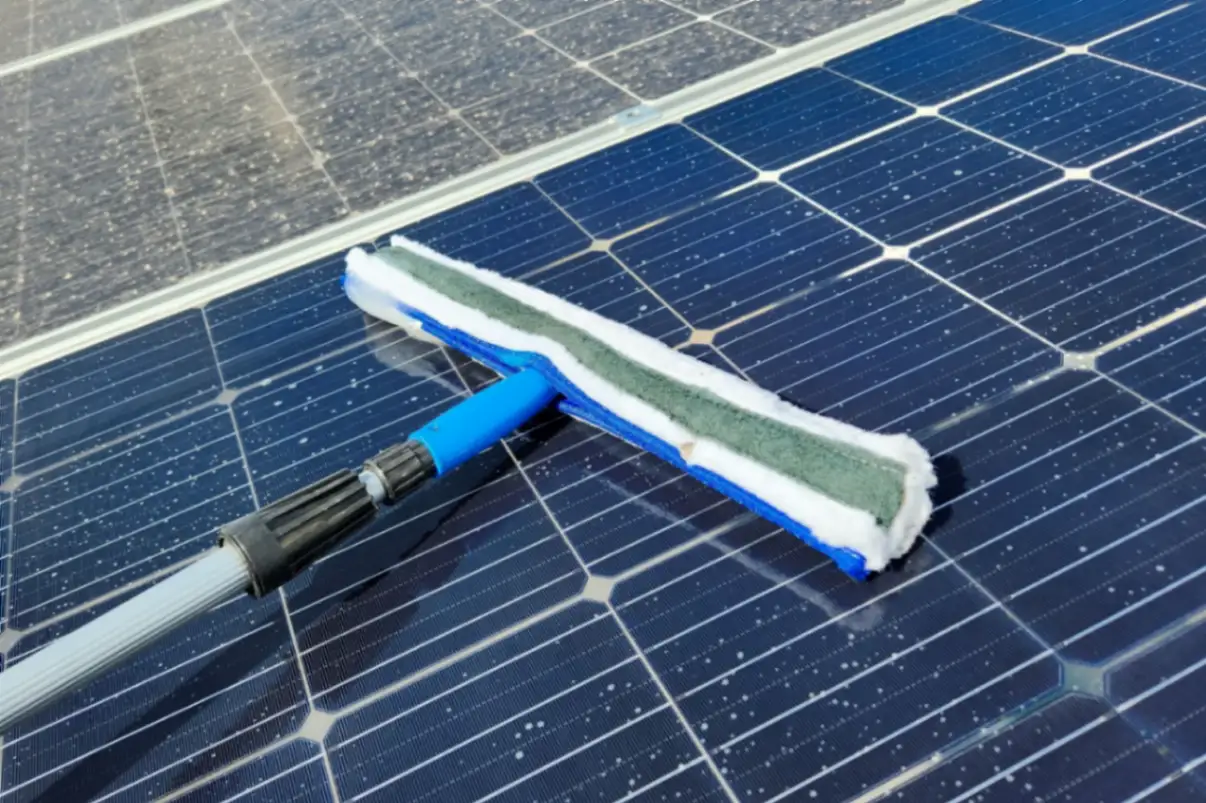
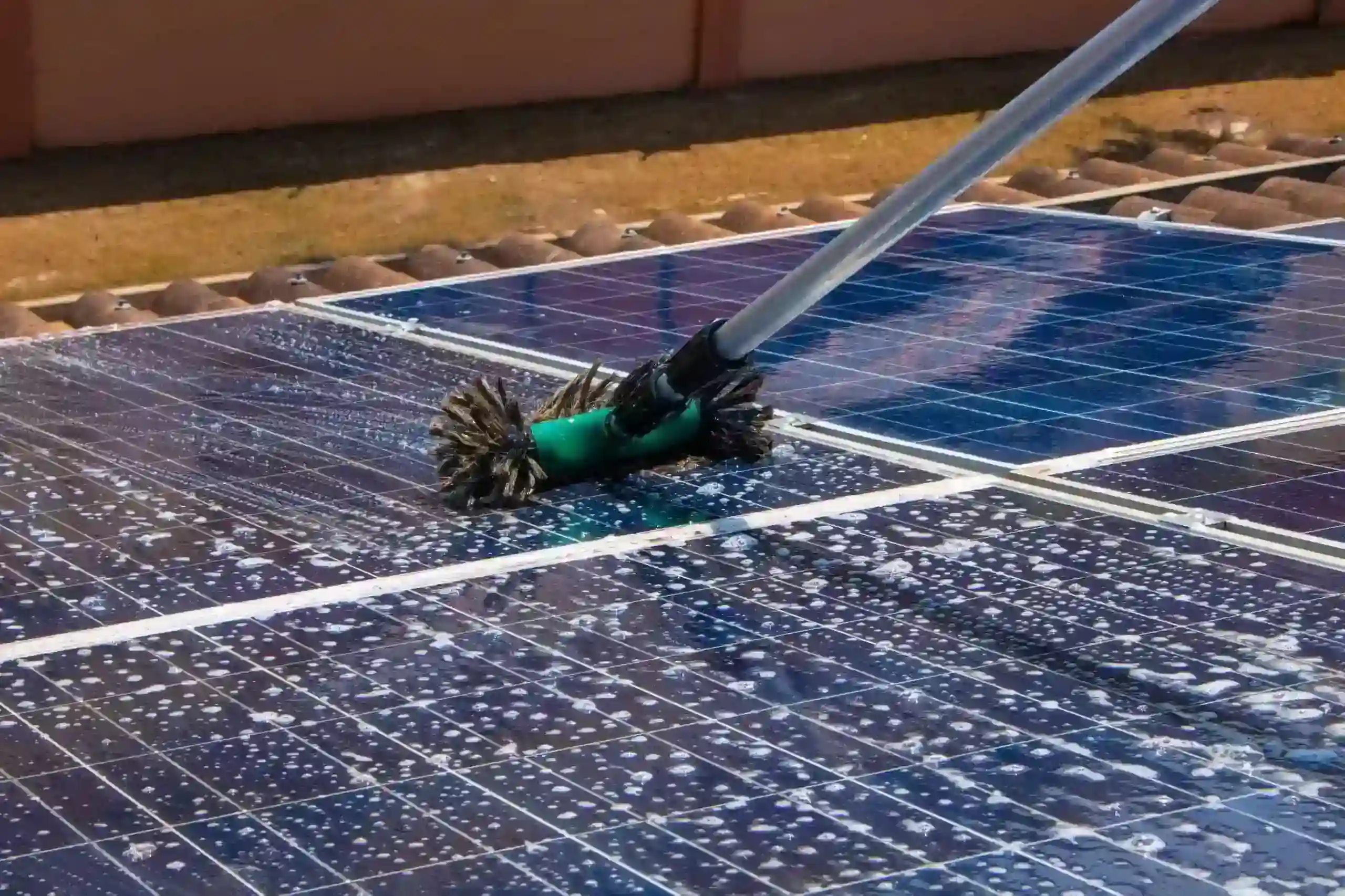
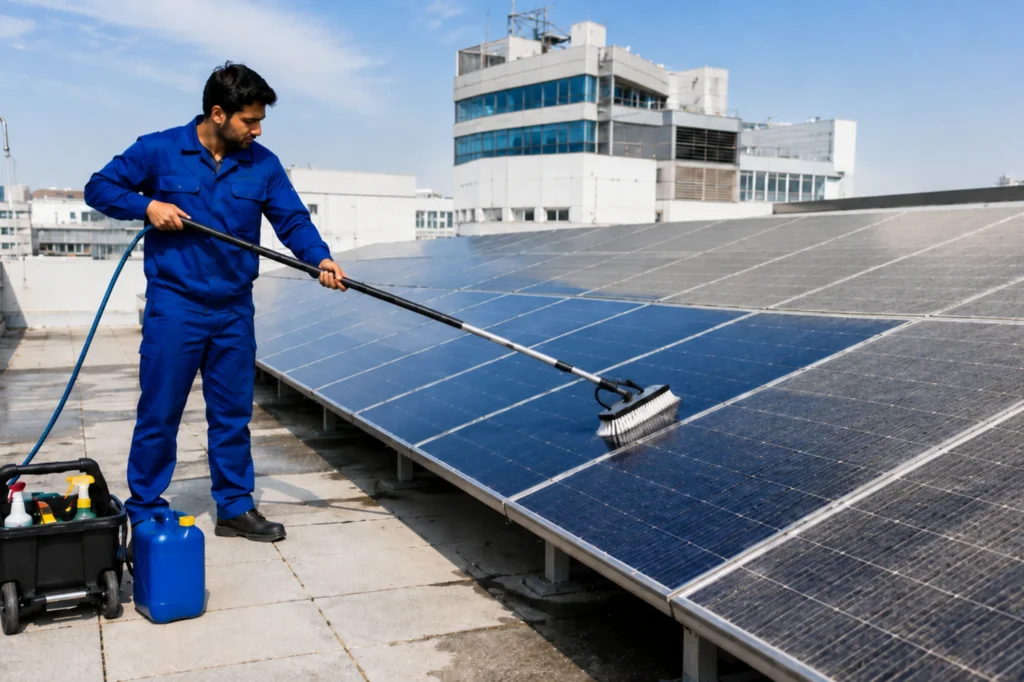
Manual brushing wraps up the wash. Soft polypropylene bristles on telescopic poles allow ground-level technicians to reach panels without stepping on them. Walking on glass voids most manufacturer warranties and risks invisible micro-fractures that surface months later as performance drops.
Choosing a Trustworthy Solar Cleaning Company
Plenty of operators in Lahore now advertise rooftop maintenance, but quality varies enormously between them. Identifying a serious solar cleaning company saves you from the false economy of cheap, careless work.
Equipment is the easiest tell. Ask whether the team brings its own water filtration unit, harness gear with rated anchor straps, and digital meters for before-and-after comparisons. Operators relying only on tap water and household brushes are doing surface theatre, not actual maintenance.
Documentation reveals professionalism just as clearly. Reliable providers send written reports covering inverter readings, panel condition photos, and any defects spotted during the visit. AfinitySolar, for instance, leaves homeowners with itemised maintenance logs that double as warranty documentation if a claim ever becomes necessary down the line.
Pricing structure tells the rest of the story. Honest quotes break down per-panel cost, water treatment cost, and access difficulty separately. Vague lump-sum offers usually hide either skipped steps or insufficient labour time on-site.
Solar Panel Cleaning Kit: Sensible Backup Between Visits
Plenty of homeowners want a way to handle light upkeep themselves between scheduled cleanings. Buying a basic solar panel cleaning kit covers that gap reasonably well, provided you understand exactly what it can and cannot achieve.
A typical kit bundles a soft-headed cleaning brush, a long carbon-fibre or aluminium pole, plus a microfibre wiper attachment. Many also include a hose connector with adjustable flow. Such gear handles routine dust between professional appointments — nothing more ambitious than that.
Working safely demands the right time window. Sunrise through 8 AM, and again after 6 PM in summer, offers safer surface temperatures and gentler lighting. Cleaning hot glass under harsh sun causes thermal shock, which over years contributes to cell delamination along the panel edges.
One honest limit to keep in mind: a kit cannot diagnose anything. Voltage irregularities, hot-spot formation, and corroding terminals stay completely outside what surface tools can reveal. Pair occasional DIY rinses with quarterly expert inspections to cover both fronts properly.
Automatic Solar Panel Cleaning Considerations for Villas
Larger Paragon City homes running 12-kilowatt installations or higher reach a point where regular manual visits feel inefficient. An automatic solar panel cleaning system offers a hands-off alternative — though it makes financial sense only beyond a certain array size.
Two main designs dominate the residential market here. Rail-guided motorised brushes mount along the top edge of each panel row and sweep across on a programmed schedule. Robotic units, by contrast, move independently across the array surface using onboard sensors and battery power.
Water dependency separates them further. Wet systems link to a small filtration tank that supplies treated water for each cycle. Dry-brush versions skip water entirely, which suits Paragon City households dealing with afternoon supply cuts during peak demand months.
Neither approach eliminates the need for human eyes. Automatic units clean efficiently but cannot spot frame loosening, sealant cracking, or junction box discoloration. Plan on one manual inspection every three months even with full automation in place.
Setting the Right Cleaning Schedule for Your Property
Frequency depends almost entirely on the conditions immediately around your house. Three variables matter most: distance from open ground, tree density nearby, and the angle at which your panels are mounted.
Properties backing onto fields or undeveloped plots collect soiling roughly twice as fast as homes deep inside built-up blocks. Houses surrounded by mature trees see less wind-borne dust but considerably more organic debris — leaves, pollen, and droppings. Heavily inclined panel arrays self-shed better during rain but still benefit from human intervention every quarter.
Smog season demands special attention. Lahore’s air quality typically deteriorates sharply from late October through January, with PM2.5 particles bonding tightly to cold glass overnight. Booking thorough Solar plate Cleaning before December prevents this layer from setting in. Removing fresh soiling costs far less than dealing with a hardened, chemically bonded coating later.
Treat inverter data as your honest advisor throughout the year. Sudden generation drops on otherwise clear, mild days almost always trace back to surface contamination rather than equipment failure. Acting promptly on those signals keeps your system at peak performance and stretches the lifespan of every component on the roof.