Ask any Lahore household running on solar what surprised them most, and the answer is rarely the installation — it’s how quickly performance fades without upkeep. Solar Panels cleaning is the single most overlooked habit among rooftop owners across the city, even though dust here builds faster than in almost any major Pakistani urban centre. This guide walks through what actually causes that buildup, how to deal with it sensibly, and how to judge whether a job is being done right.
You do not need to be an engineer to keep your system healthy. What you need is a clear understanding of local conditions, the right timing, and a realistic sense of when to handle things yourself versus calling in help.
Why Lahore Air Is So Hard on Rooftop Panels
Few cities punish solar glass the way Lahore does. The combination of dry plains, heavy traffic, seasonal crop burning, and winter smog creates a year-round dust cycle with almost no natural break.
Through spring, loose soil from surrounding farmland drifts into the city on warm winds and settles overnight. Summer adds construction dust from the constant development across the southern suburbs. Then comes the worst stretch — late autumn into winter — when smog blankets the city and deposits a fine, oily film that ordinary rain simply cannot lift.
Each of these layers behaves differently on the panel surface. Loose dust scatters light and trims output gradually. The winter film, by contrast, bonds chemically to cool glass overnight and demands proper treatment to remove. Treating both the same way is where most owners go wrong.
What Dirty Panels Actually Cost You
Lost generation is rarely dramatic enough to notice day to day, which is exactly why it slips past people. Skipping Solar Panels cleaning for even two weeks during a Lahore dust spell can shave 15 to 25 percent off rated output — and you only spot it on the monthly bill.
Shading from bird droppings is a sharper problem. A single dropping sitting on one cell can force the panel’s bypass diode to kick in, dropping the output of an entire connected string. The damage far outweighs the size of the mark. Areas thick with trees — older neighbourhoods near canal banks especially — see this far more often.
Heat plays a quiet role too. Dust traps warmth against the glass, and panels run less efficiently as their temperature climbs. During a Lahore June, where rooftop surfaces routinely cross 60 degrees Celsius, a dusty array compounds an already difficult operating environment.
Doing It Yourself Versus Calling a Professional
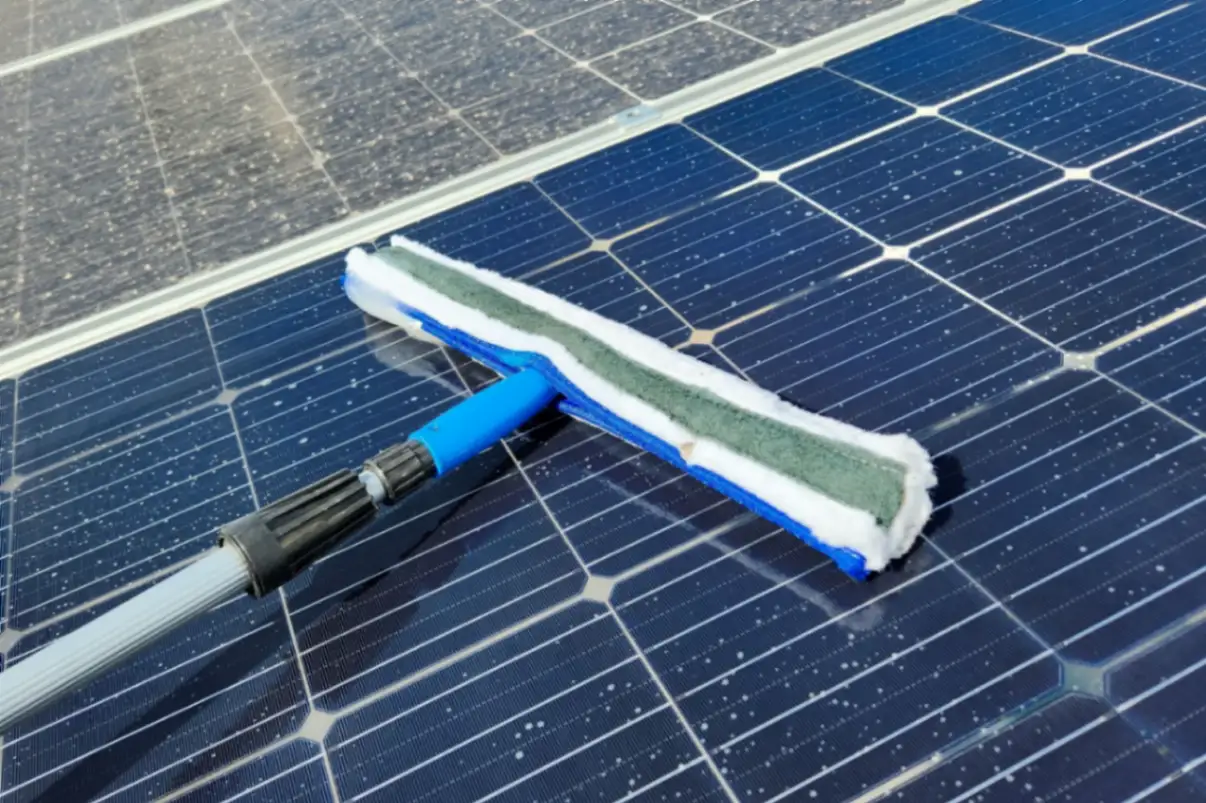
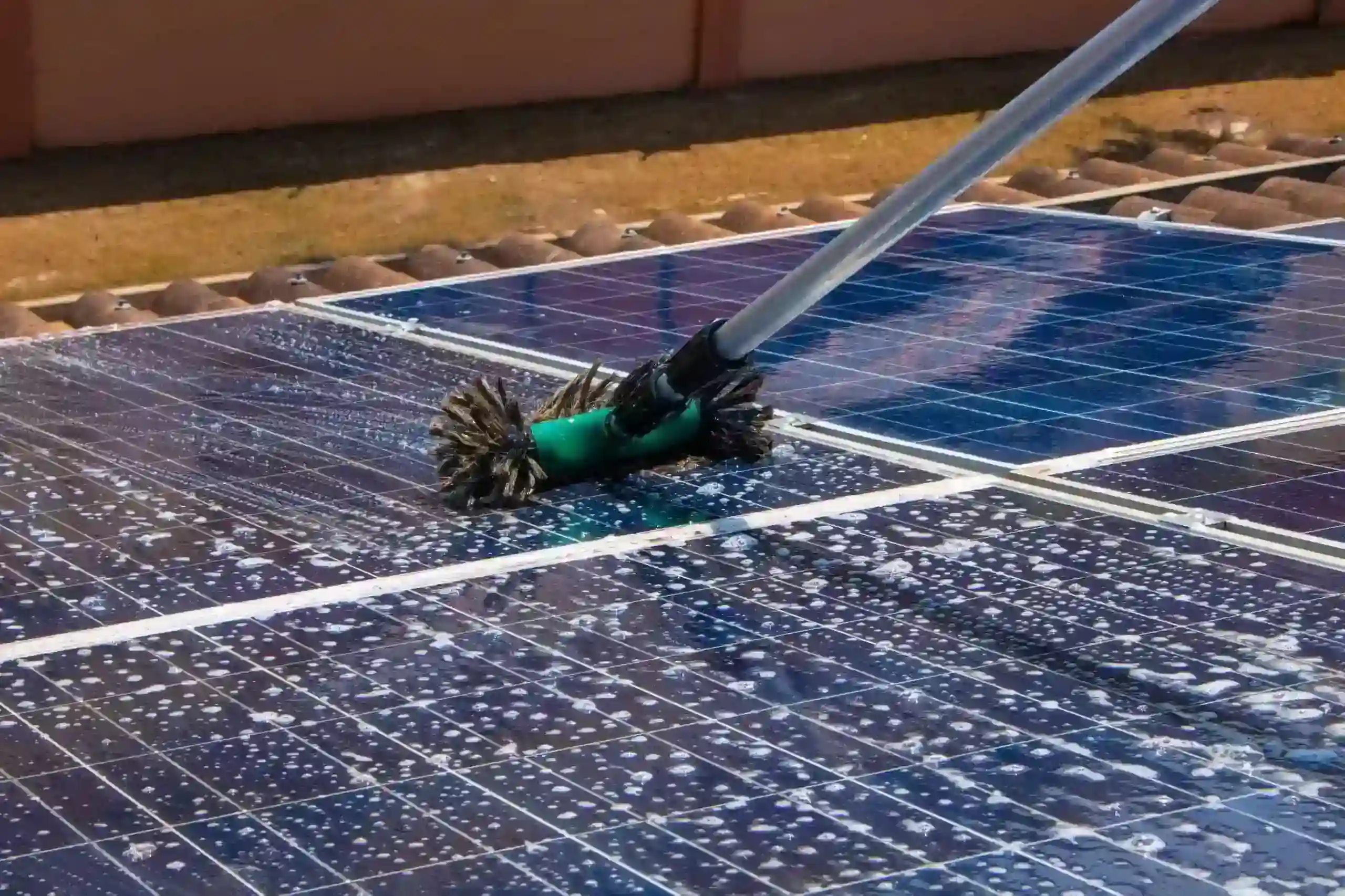
For a small rooftop system on an accessible flat roof, basic upkeep at home is entirely reasonable. A soft brush, a long pole, and filtered water cover most routine dust between deeper cleans. Reliable Solar plate Cleaning at home comes down to two rules: never scrub with anything abrasive, and never clean hot glass under direct midday sun.
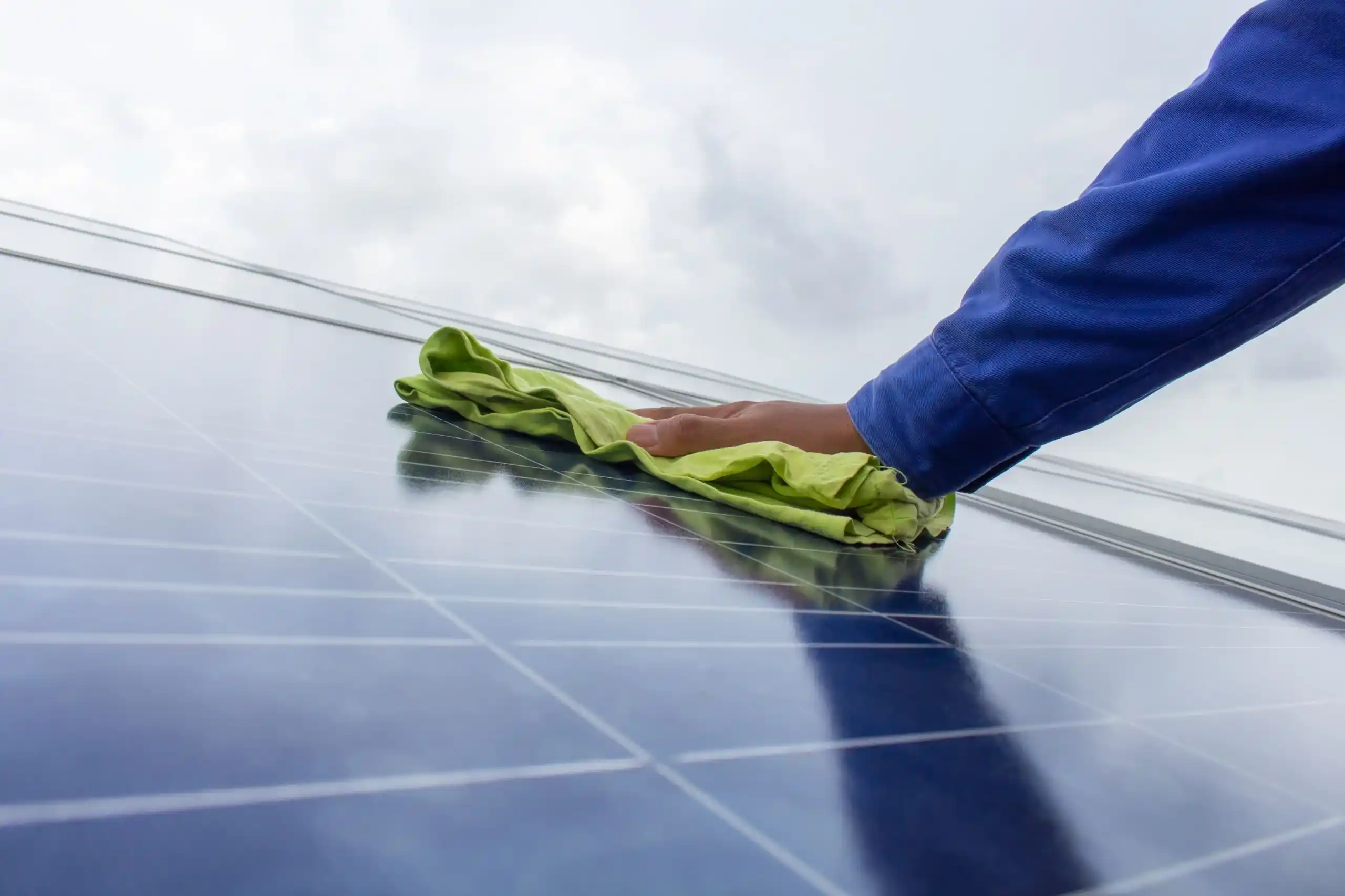
Timing matters more than people expect. Early morning, before the sun gains strength, gives you cool glass and gentle light to spot streaks. Washing scorching panels at noon causes water to dry instantly and leave mineral marks — and on older panels, the thermal shock risks fine cracks along the cells.
That said, DIY has firm limits. Steep roofs, double-storey homes, and large arrays are genuinely dangerous without proper harness and anchor points. A homeowner also cannot inspect wiring, junction boxes, or frame corrosion the way trained staff can. This is where a dedicated solar cleaning company earns its keep — not just for the wash, but for the inspection that comes with it.
What a Proper Professional Visit Includes
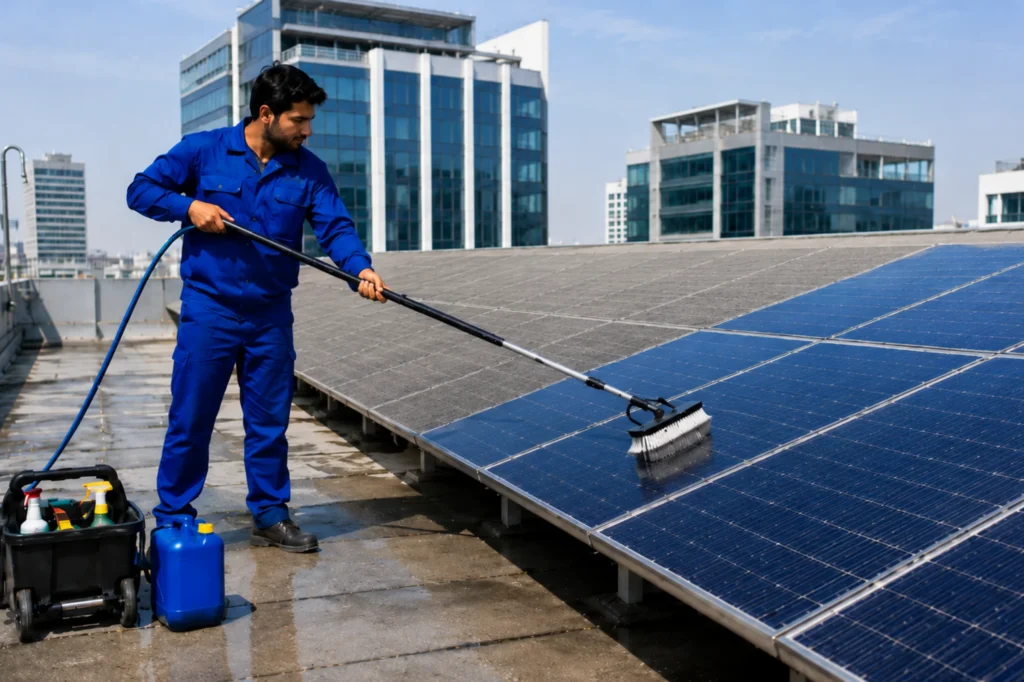
A serious crew does far more than rinse glass and leave. Good Solar Panels cleaning starts with a check of your inverter readings against expected output for the month, which tells the team whether soiling alone explains any drop.
Water quality is the detail that separates careful operators from careless ones. Much of Lahore’s tap and borewell water runs hard, heavy with calcium and magnesium that leave chalky streaks once dry. Proper crews bring filtered or deionised water so the panels finish clean rather than spotted. Anyone showing up with just a hose and a household sponge is not really maintaining your system.
Inspection rounds out the job. Good technicians check frame fixings, look for sealant cracking, and scan for hot spots or micro-fractures in the cells. Homeowners in DHA, where premium rooftop systems are common, increasingly expect this level of detail — and quality solar panel cleaning services in DHA now treat documented before-and-after readings as standard practice rather than a bonus.
Choosing Someone You Can Actually Trust
Plenty of general handymen across Lahore have recently bolted “solar cleaning” onto their service list. Telling the careful operators apart from the opportunists protects both your warranty and your panels.
Equipment gives the clearest signal. Ask whether the team carries its own water filtration, rated safety harnesses, and meters for measuring output before and after. Firms like AfinitySolar build their process around documented results, leaving owners with a clear record of what changed. That paper trail matters if a warranty claim ever comes up later.
Pricing honesty is the other tell. A trustworthy quote breaks down per-panel cost, water treatment, and roof access difficulty rather than offering one vague lump sum. Flat pricing that ignores how high or steep your roof sits usually hides a corner being cut somewhere in the work.
When Automation Starts to Make Sense
For most Lahore homes, regular manual cleaning remains the practical choice. But once an installation grows past roughly 12 to 15 kilowatts, the maths begins to shift toward automation.
An automatic solar panel cleaning system uses either a rail-mounted motorised brush or a self-moving robotic unit to clean panels on a fixed schedule. Larger villas and small commercial rooftops benefit most, since manual visits across dozens of panels add real cost and coordination over time. Dry-brush versions need no water at all, which suits properties dealing with Lahore’s afternoon supply cuts during peak demand.
Automation still does not replace human eyes entirely. Brushes keep surfaces clear but cannot catch loosening bolts, cracked sealant, or moisture creeping into a junction box. Even fully automated setups need a manual inspection every few months to stay genuinely healthy.
Keeping Your System at Its Best
The clearest signal that cleaning is overdue sits right on your inverter display. A noticeable drop in generation on a clear, mild day almost always points to surface dust rather than a fault inside the system. Watching that figure across the week tells you more than any fixed calendar reminder ever could.
For most Lahore rooftops, Solar Panels cleaning every six to eight weeks through dusty months, plus a thorough wash before the winter smog sets in, keeps performance steady. Stay ahead of the buildup rather than reacting to it, and your panels will return the favour with years of reliable output and a noticeably gentler electricity bill.